2026 · Field notesAbout 13 min readNovus Stream Solutions
Lead qualification system for service businesses that need better-fit clients
A practical qualification flow to reduce low-fit sales calls and improve close quality.
Contents
- 1.Overview
- 2.Three-stage qualification flow
- 3.After-call scoring
- 4.Building qualification into your intake process
- 5.What to do with borderline leads
- 6.Disqualification language that preserves future relationships
- 7.Qualification criteria evolve as your business evolves
- 8.Qualification is mutual clarity, not gatekeeping
- 9.The real cost of a bad-fit lead
- 10.Front-load qualification into intake
- 11.Structure beats gut feel in scoring
- 12.The nurture track for borderline leads
- 13.Disqualifying without burning the relationship
Overview
Bad-fit leads consume your calendar and erode team confidence. Qualification is not gatekeeping; it is mutual clarity before both sides invest heavily.
Service teams that qualify well protect delivery quality and reduce churn by aligning scope, budget, and timeline before proposal stage.
Three-stage qualification flow
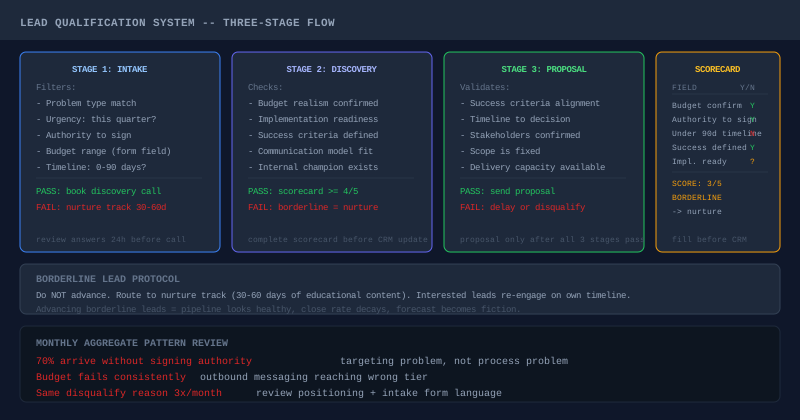
Stage one filters basics: problem type, urgency, and authority. Stage two checks budget realism and implementation readiness. Stage three validates success criteria and communication model.
Document red flags explicitly so sales does not improvise standards under quota pressure.
After-call scoring
Use a consistent post-call scorecard. If lead scoring varies by salesperson mood, pipeline forecasts will drift and hiring plans will suffer.
A useful scorecard has five to seven fields, each answered with a simple score or yes/no rather than open text. Open text responses vary too much between salespeople and between moods to aggregate reliably. Structured fields — budget confirmed yes/no, decision timeline under 90 days yes/no, authority to sign confirmed yes/no — create data you can actually use to forecast. The discipline of requiring scorecard completion before updating CRM stage is the enforcement mechanism. Without it, the scorecard becomes optional and the data becomes unreliable.
Review scorecard data monthly in aggregate, not just at the individual lead level. Patterns in where leads score well versus where they consistently score poorly tell you something about your marketing and positioning, not just about your sales execution. If 70 percent of leads arrive without authority to sign, the problem is probably targeting rather than qualification process. If budget confirmation fails consistently, your outbound messaging may be reaching the wrong budget tier. Let the scorecard data diagnose systemic issues, not just individual calls.
- Require scorecard completion before any lead advances past discovery stage.
- Review aggregate scores monthly to identify systemic gaps in lead quality or targeting.
- Add a field for "stated reason for not moving forward" on disqualified leads — patterns here inform positioning.
Building qualification into your intake process
The best place to begin qualification is before the first call happens. A well-designed intake form filters out obvious mismatches without human involvement. Ask directly about budget range, timeline, and the primary outcome they need. These fields feel intrusive to some operators, but they perform two functions: they disqualify leads who are not ready to answer them honestly, and they give the salesperson context before the first conversation so no time is spent on basics.
Frame intake questions around the prospect's goals rather than your service categories. "What does success look like in the next 90 days?" surfaces more useful information than "Which service tier are you interested in?" Prospect-framed language also reduces bounce on the intake form because it feels like a discovery conversation rather than a vendor questionnaire. Whatever questions you include, review answers before the call so you arrive with a hypothesis, not a blank slate.
- Include one budget-range question and one timeline question in every intake form.
- Review intake answers at least 24 hours before the call so you arrive with a hypothesis.
- Track which intake fields best predict whether a lead converts — drop the ones that do not.
What to do with borderline leads
Every qualification system produces a category of borderline leads: prospects who clear some criteria but not others. The temptation is to advance them anyway because the pipeline feels thin or the salesperson is optimistic. This is where qualification discipline matters most. Borderline leads consume as much time as qualified leads but close at a fraction of the rate, which means your close rate, pipeline velocity, and revenue forecast all degrade quietly.
The right protocol for borderline leads is a nurture track rather than a direct handoff to sales. Send them educational content relevant to their stated problem, invite them to a webinar or case study, and give them 30 to 60 days to self-select forward. Leads who are genuinely interested but not yet ready will re-engage on their own timeline. Leads who were never a real fit will drop off without consuming sales time. That separation makes your pipeline numbers honest and your forecasts actionable.
Disqualification language that preserves future relationships
Disqualifying a lead does not have to end the relationship. The language you use when a prospect does not meet your criteria determines whether they remember you positively or negatively — and whether they refer others to you later. A disqualification that says "we are not the right fit for your current stage, but here is who might be" is a relationship-preserving act. A disqualification that feels like rejection or a lack of interest damages a connection that may have had future value.
Write your disqualification templates before you need them, in a calm moment when you are not under pressure to preserve a deal. The template should acknowledge what the prospect shared, explain briefly why the fit is not right at this time (without over-explaining), and offer a genuine alternative if one exists. Prospects who are disqualified respectfully often refer you to colleagues who are a better fit — because the disqualification itself demonstrated professional judgment rather than desperation.
Qualification criteria evolve as your business evolves
Qualification criteria that were right for your first year may not be right for your third. As your delivery capacity grows, as your team becomes more specialized, and as you accumulate data on which client types produce the best outcomes and referrals, your definition of a well-qualified lead should update. A founder who accepts any client willing to pay day rates in year one should be disqualifying on much more specific criteria by year three — industry fit, implementation readiness, team size, or whatever your data shows correlates with successful delivery.
Review your qualification criteria annually using outcome data, not sales intuition. Pull every client from the past year, score them against your current qualification criteria, and examine whether the ones who scored highest also produced the best outcomes. If not, your criteria are measuring the wrong things. This retrospective audit is the most data-driven way to improve your qualification system — it tells you what actually predicts a successful engagement rather than what your sales team assumes.
Qualification is mutual clarity, not gatekeeping
The framing that makes qualification feel comfortable rather than adversarial is that it is mutual clarity before both sides invest heavily, not a gate you put up to keep people out. A good qualification process serves the prospect as much as it serves you: it surfaces, early, whether the fit is real, so that neither party spends time on an engagement that was never going to work. The prospect who is not a fit is better off learning that quickly than after a lengthy sales process and a disappointing engagement, and the prospect who is a fit benefits from the clarity about scope, budget, and timeline that good qualification establishes before anyone commits. Reframing qualification as a service to both sides removes the discomfort that makes operators skip it.
This mutual-clarity framing also changes how qualification feels to conduct. When you understand that you are helping the prospect determine fit rather than deciding whether to admit them, the questions become collaborative rather than interrogative, and the prospect experiences the process as thoroughness rather than gatekeeping. The questions about budget, timeline, and success criteria are not obstacles but the shared groundwork that makes a good engagement possible, and a prospect who is a genuine fit appreciates the rigor because it signals an operation that takes delivery seriously. Qualification done in this spirit improves the relationship with good-fit prospects while filtering out bad-fit ones, which is exactly the dual outcome a small service business needs. It is not about keeping people out; it is about ensuring that the engagements that start are ones both sides can succeed in, which serves everyone.
The real cost of a bad-fit lead
Bad-fit leads are expensive in ways that go beyond the time spent on the sales call that does not close, and understanding the full cost is what justifies the discipline of qualification. A bad-fit lead that closes is worse than one that does not, because it consumes delivery capacity on an engagement that goes poorly, generates the dissatisfaction and churn that damage your reputation, and demoralizes a team that knows the work was never set up to succeed. Even a bad-fit lead that does not close has a cost: the calendar time, the proposal effort, the emotional energy, all spent on a prospect who was never going to be a good outcome. These costs are diffuse, which is why they are easy to ignore, but they accumulate into a real drag on a small operation.
The compounding cost is what makes qualification worth the discomfort of saying no. An operation that does not qualify well fills its pipeline and its delivery schedule with mismatched engagements, each of which underperforms and each of which displaces a well-fit engagement that would have gone better. The team's confidence erodes as they repeatedly deliver work that disappoints, and the reputation suffers as dissatisfied clients share their experience. Qualification protects against all of this by ensuring the engagements that start are ones that can succeed, which protects delivery quality, team morale, and reputation simultaneously. The cost of qualifying — turning away some prospects, investing in an intake process — is small and concentrated; the cost of not qualifying is large and diffuse, spread across every bad-fit engagement and its downstream effects. Counting the full cost of bad-fit leads is what reveals qualification as a high-return discipline rather than an optional nicety.
Front-load qualification into intake
The most efficient place to qualify is before the first conversation, through a well-designed intake process that filters obvious mismatches without consuming anyone's time. An intake form that asks directly about budget range, timeline, and the primary outcome the prospect needs performs two functions at once: it disqualifies prospects who are not ready to answer those questions honestly, and it gives the salesperson context before the first call so no time is wasted establishing basics. Front-loading qualification this way means the conversations you do have are with prospects who have already cleared the first filter, which raises the quality and lowers the volume of sales calls — exactly the trade a capacity-constrained small operation wants.
The craft of intake is framing the questions around the prospect's goals rather than your service categories, which both surfaces more useful information and feels less like a vendor questionnaire. Asking what success looks like in the near term reveals more than asking which service tier they want, because it gets at the actual outcome the prospect is after, which is the thing that determines fit. Prospect-framed questions also reduce the bounce rate on the intake form, because they feel like the beginning of a helpful conversation rather than a gate. Whatever questions you include, the value is fully realized only if you review the answers before the call, arriving with a hypothesis about fit rather than a blank slate. Front-loaded qualification through thoughtful intake is what makes the limited sales capacity of a small team go to the prospects most likely to be a good fit, which is the highest-leverage improvement available to a service-business sales process.
Structure beats gut feel in scoring
Lead scoring that varies with the salesperson's mood produces pipeline forecasts that drift and hiring plans that suffer, which is why a consistent, structured post-call scorecard matters more than it seems. The key to a usable scorecard is structured fields with simple scores or yes/no answers rather than open text, because open-text assessments vary too much between people and between moods to aggregate into reliable data. Structured fields — budget confirmed, timeline within a defined window, authority to sign present — create data you can actually forecast from, while narrative impressions create the illusion of assessment without the substance. The discipline of requiring scorecard completion before advancing a lead is what enforces the consistency that makes the data trustworthy.
The payoff of structured scoring is not just better individual decisions but the ability to diagnose systemic issues by reviewing the aggregate. When scores are structured, patterns become visible: if most leads arrive without authority to sign, the problem is targeting rather than qualification; if budget confirmation consistently fails, the outbound messaging may be reaching the wrong tier. These diagnoses are only possible with structured, aggregatable data, and they point at the real levers — marketing, positioning, targeting — rather than blaming individual sales execution. Reviewing scorecard data monthly in aggregate, looking for where leads consistently score well or poorly, turns the scorecard from a per-lead tool into a diagnostic instrument for the whole top of the funnel. Structure is what makes the scoring both consistent at the individual level and informative at the systemic level, which gut-feel assessment can never provide.
The nurture track for borderline leads
Every qualification system produces borderline leads — prospects who clear some criteria but not others — and the temptation to advance them anyway, especially when the pipeline feels thin, is exactly where qualification discipline matters most. Borderline leads consume as much sales time as qualified ones but close at a fraction of the rate, which means advancing them degrades your close rate, your pipeline velocity, and your forecast accuracy all at once, while the optimism that drove the decision rarely pays off. The disciplined response is not to advance borderline leads to sales but to route them to a nurture track that lets them self-select forward on their own timeline.
A nurture track resolves the borderline problem elegantly by separating the genuinely-interested-but-not-ready from the never-really-a-fit without consuming sales capacity on either. Educational content relevant to the prospect's stated problem, an invitation to a relevant resource, and time to develop allow the genuinely interested leads to re-engage when they are ready, while the poor fits drop off without further sales investment. This separation makes the pipeline honest — the leads that reach sales are the ones who have demonstrated readiness — which makes the forecasts actionable rather than inflated with borderline deals that will not close. The nurture track is the mechanism that lets you maintain qualification discipline even when the pipeline feels thin, because it gives the borderline leads a path forward that does not require spending scarce sales time on prospects who are not yet, and may never be, ready to buy.
Disqualifying without burning the relationship
Disqualification does not have to end a relationship, and how you handle the moment determines whether a disqualified prospect remembers you positively and refers others, or remembers you as a rejection. A disqualification framed as "we are not the right fit for your current situation, and here is who might be" is a relationship-preserving act that demonstrates professional judgment, while one that reads as disinterest or rejection damages a connection that may have had future value. The prospect who is disqualified respectfully, with a genuine alternative offered where one exists, often becomes a source of referrals precisely because the disqualification itself showed integrity — an operation willing to turn away a poor fit signals that it takes fit seriously, which is reassuring to the colleagues that prospect might refer.
The practical move is to prepare disqualification language in advance, in a calm moment rather than under the pressure of a live deal you might be tempted to preserve. A good disqualification acknowledges what the prospect shared, explains briefly and without over-explaining why the fit is not right now, and offers a real alternative if you have one. Writing these templates before you need them ensures the disqualification is gracious rather than awkward, which is hard to achieve when improvising under the pull of an active prospect. Treating disqualification as an opportunity to demonstrate judgment rather than as a loss to minimize is what turns the necessary act of saying no into a relationship that may pay off later. The prospects you disqualify well are part of your network, not people you have lost, and handling the disqualification with care is what keeps them so.
Frequently asked questions
Quick answers to common questions about this topic.
How do I qualify leads for a service business?
Use a short set of questions about need, budget, timeline, and fit before investing time in a proposal. A simple filter surfaces clients you can genuinely help and screens out mismatches early.
Why qualify leads instead of taking everyone?
Bad-fit clients cost more than they pay — in scope creep, stress, and poor outcomes. Qualifying protects your capacity for the clients where you do your best work.